
How it works
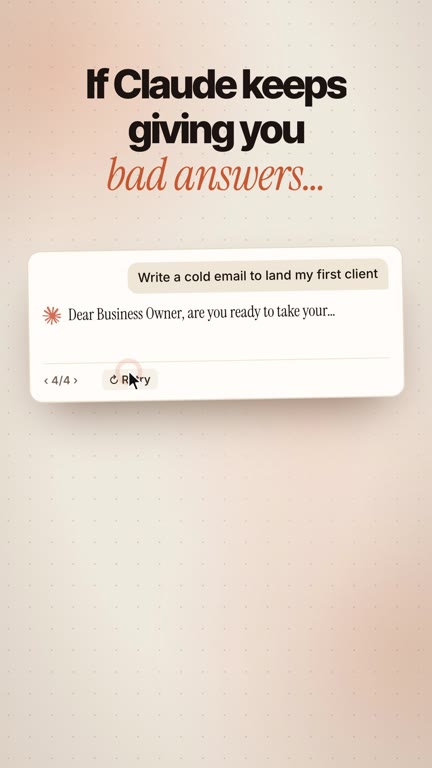
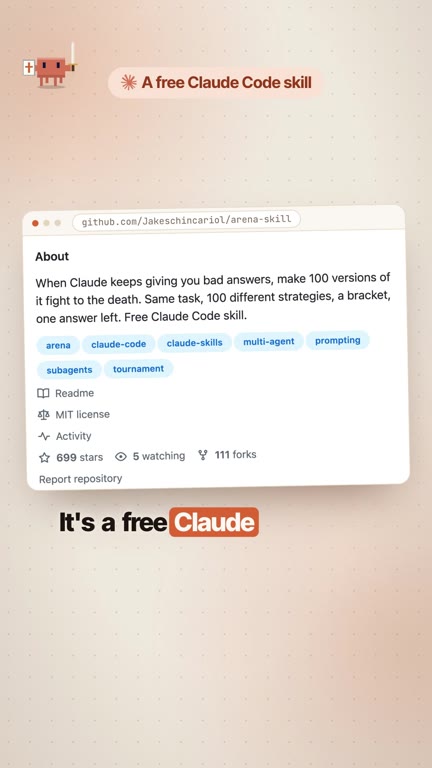
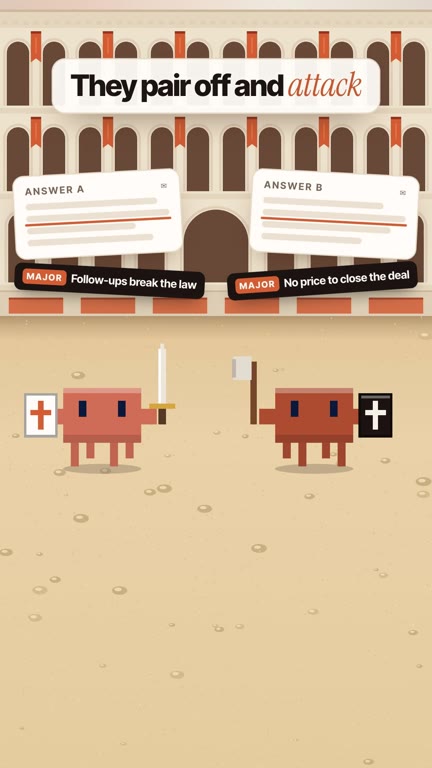
Use it when Claude's answer isn't good enough. Instead of asking again and again, you run a tournament.
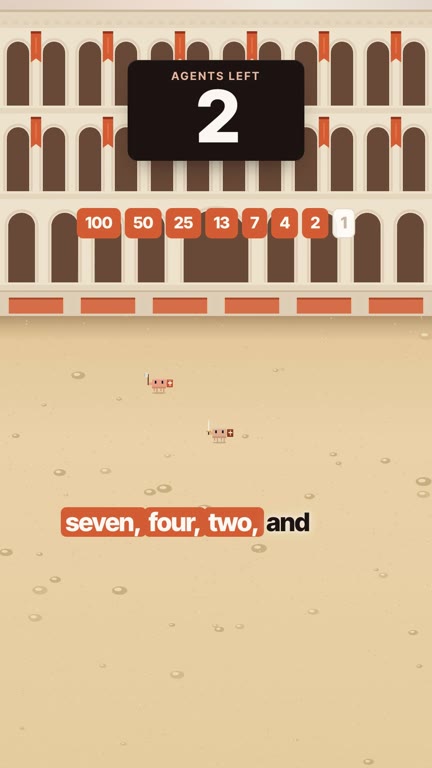
Agents left after each round of the default 100-agent arena. You get the winning answer, the attacks it survived and the number of rounds.
What you need
The steps
Install once. After that it's one command whenever an answer isn't good enough.
Install the skill
Open Claude Code and paste this. It's the exact install message from the Arena README:
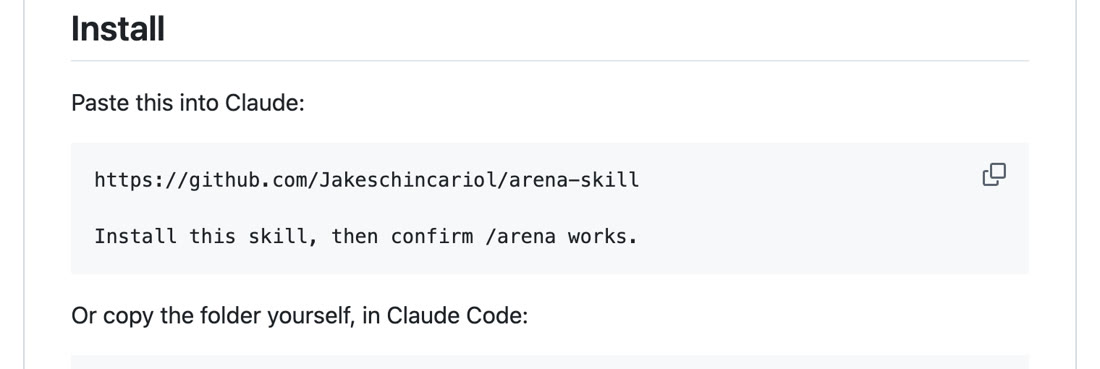
The install section on github.com/Jakeschincariol/arena-skill.
Prefer doing it yourself? In a terminal:
Turn on accept-edits
Every sub-agent writes its answer to a file inside a .arena/ folder. In the default permission mode, that's one approval per file, which is hundreds on a big run.
Run it
Start with quick mode. It's 16 agents instead of 100, and it's what I used for the real run below.
/arena --quick with no task. It takes your last request as the task and the answer you didn't like as the one to beat, then tells you honestly if the old answer scores higher.Write a task that stands on its own
The sub-agents can't see your chat. All they know is the task, so a vague task gets 100 kinds of vague back. Put the audience, length, tone and "what done looks like" in the task itself. This prompt helps:
I ran it for real
Everything in the reel comes from this run: the strategy cards, the attacks, the scores and the winning email.
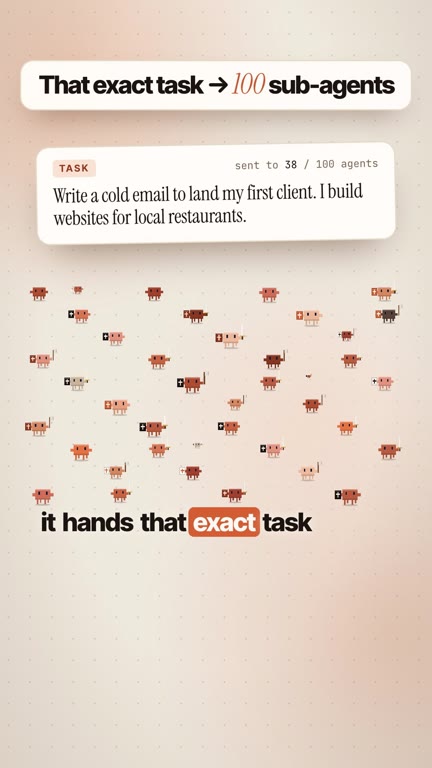
The task: "Write a cold email to land my first client. I build websites for local restaurants." I ran /arena --quick, and also gave it a plain one-shot Claude answer to beat.
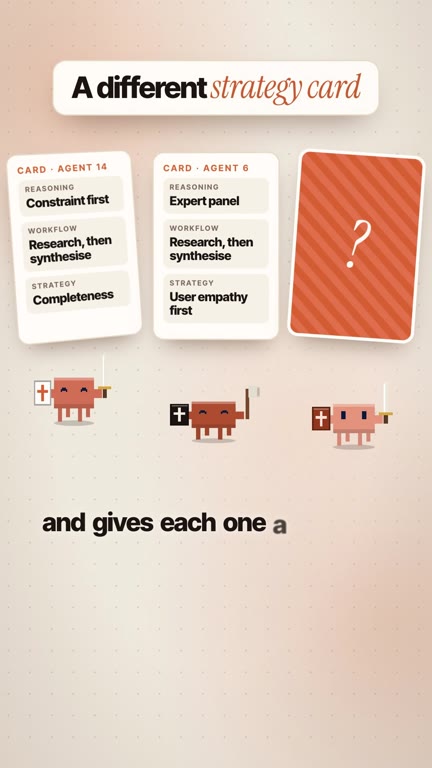
Three of the cards that were dealt:
Constraint first · Research, then synthesise · Completeness
Expert panel · Research, then synthesise · User empathy first
Contrarian · Options matrix · Speed
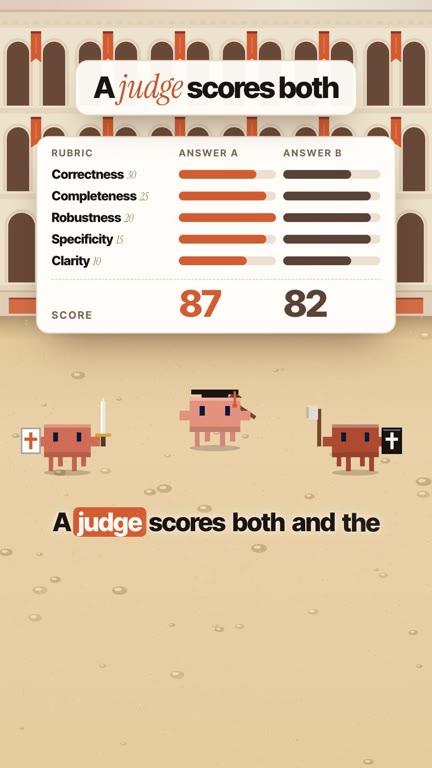
The final went 87–82. In a blind check, the winner beat the plain one-shot answer 91–61. The judge noted that the plain answer asked for a portfolio link a first-timer doesn't have, promised online booking a website can't create, and left out the legal footer and opt-out. A few of the attacks the winner survived:
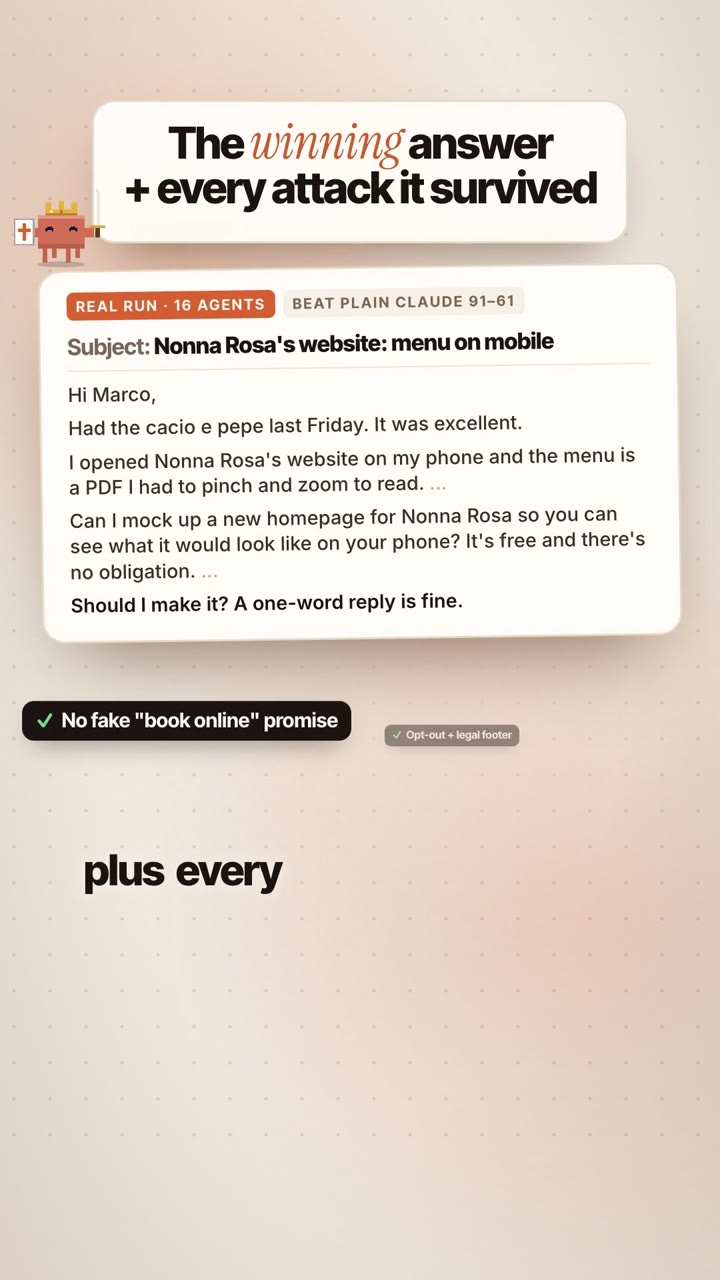
The winning email (the filled example from the champion's answer). Fill in your own details:
Only offer "a Book button" if the restaurant already takes online reservations. Otherwise say "tap-to-call and directions". The winning answer flagged that a website can't create a booking system on its own. The name, phone and address in the example are placeholders.
What it costs
The skill is free. The tokens are yours, and 100 agents is a lot of them. These numbers are from the Arena README:
| Agents | Rounds | Sub-agent calls |
|---|---|---|
| 100 (default) | 7 | 595 |
| 64 | 6 | 379 |
| 32 | 5 | 187 |
| 16 (--quick) | 4 | 91 |
| 8 | 3 | 43 |
Good to know
.arena/. Code changes come back as a diff, and Claude asks before applying them.If something goes wrong
| Hundreds of permission prompts | Press Shift+Tab to switch Claude Code to accept-edits mode before you run it. |
| /arena isn't found | Installed as a plugin, it's /arena-skill:arena. Copy the folder to ~/.claude/skills/ if you want plain /arena, then start a new session. |
| "python3: command not found" | Install Python 3.8 or newer from python.org, open a new terminal and try again. |
| It's slow or uses too much | Use --quick (16 agents) or --agents 8. A full 100-agent run is 595 sub-agent calls. |
| The winner still misses something | The sub-agents only know the task file. Add the missing requirement to your task and run it again. |
This is what I do. Check out my work.
I make content, websites and AI tools for brands, with the same kind of AI tools you just saw.
See my portfolio →